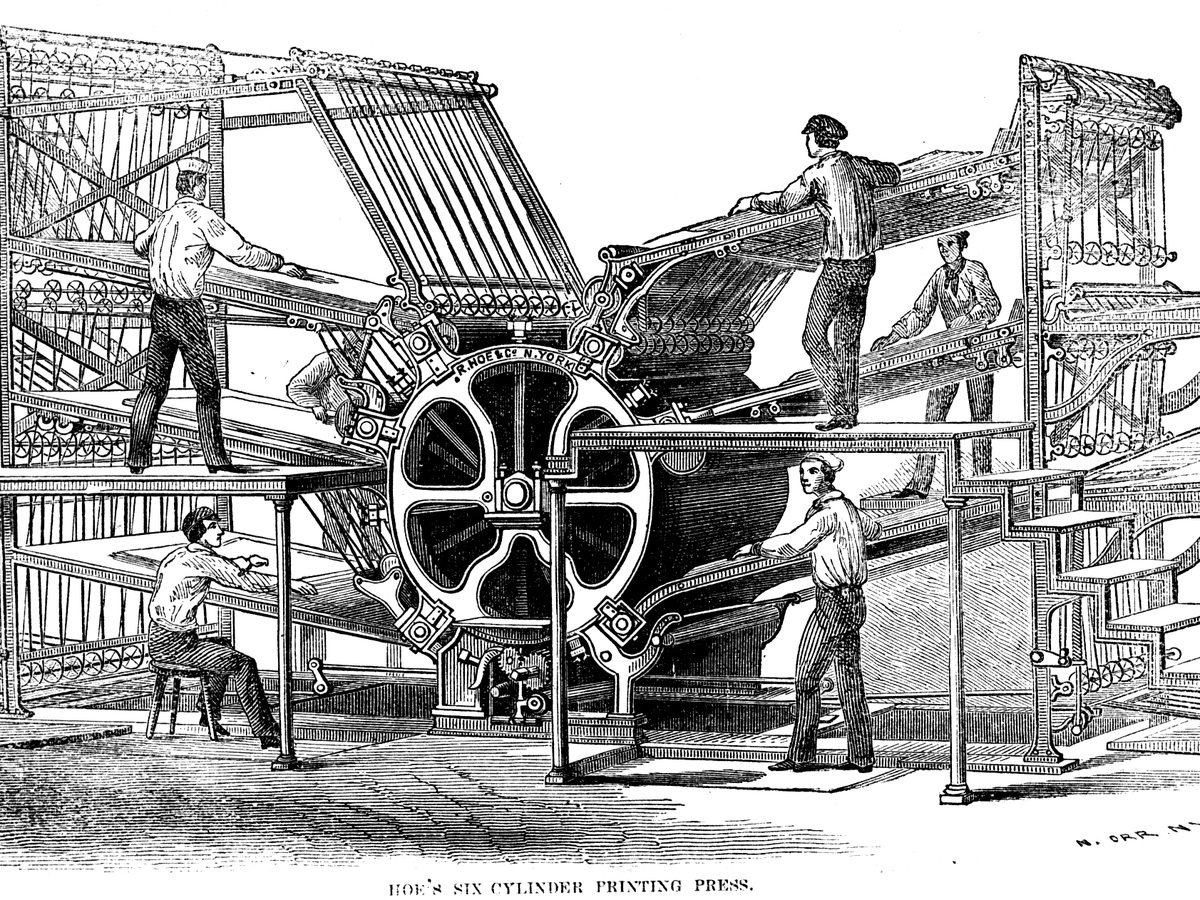
Last week, in the “50 Greatest Breakthroughs” story from the current issue, our panel of experts decreed that the printing press was the #1 most important technological advance since the wheel.
Last month, as part of our chronicles from Burlington, Vermont, I quoted Paula Routly, the co-editor of the (successful!) local weekly there, Seven Days, on the virtuous cycle that she thought had kept the paper going:
“People look at our paper and it makes them happy and interested to be here. That motivates them to do something, and participate — which makes it more a community, and gives us something to cover. It’s a cycle that works.”
Throughout this trip — in Michigan, in South Dakota, in Wyoming, in Vermont, and now in Maine — we’ve been struck by the power and importance of “local patriotism” as expressed in efforts to strengthen downtowns, school systems, civic culture, local arts, and the other elements that make life more livable.
Now a reader on the West Coast ties this all together:
Regarding the comment from the Seven Days editor about “a cycle that works”
This reminded me of Benedict Anderson’s book, Imagined Communities. To greatly oversimplify, Anderson argues that the rise of the concept of the nation state was driven by the printing press and by the spread of newspapers, which both unified areas around the vernacular language and — significantly here — gave readers a sense that they were part of a community defined by the news they were reading.
I have many, many things to say about where newspapers have gone wrong, but one of the foremost is that so many of them have paid less attention to local news than to other things.
Since I lived in the District until a few years ago, I’ll take the Washington Post as an example. Its market power has been that it was the newspaper for the DC metro area. But I think it’s pretty clear that its reporters were much more interested in the national news, and that the metro desk was not treated as a priority. When printing presses were expensive, the Post (like other papers) could afford to ignore this, so I suspect many people there have so internalized the status hierarchy on the reporting side that they have completely lost touch with the role they play locally.
I live in San Jose now, and wish the Mercury News had the same attitude as Seven Days.
The various strategies through which people define and sustain communities, imagined and real, is a theme we keep being exposed to, keep trying to learn about, and keep viewing as more and more significant. It is part of a different and more encouraging kind of America than the one our national-level political news usually conveys.
I am sure there is a quote from Democracy in America that would work well here. I will fish it out when I have the book at hand.