During our travels around the US, Jim and I always found that a first stop at the local library offered a good look into the culture of a town. With their public programs and open-door policies, libraries are a surprisingly reliable gauge of what’s going on and what the citizens consider important.
Beyond everyday activities– from adult literacy programs to homework help to GED options to tech classes, author talks, AI training, makerspaces, and so much more – we’ve found that librarians and staff are also looking ahead, planning for improvements and eyeing their landscapes from the economic to the political, technological, environmental, cultural, and best practices. And at the base of everything, of course, is lending books.
The Urban Libraries Council (ULC), one of the library world’s prominent networking and advocacy organizations, has been paying special attention to how libraries have been looking ahead to these high-level changes. For the past 15 years, the ULC’s annual Innovations Initiative awards program has recognized and honored libraries’ special projects that are set to make change, make an impact, and serve as models.
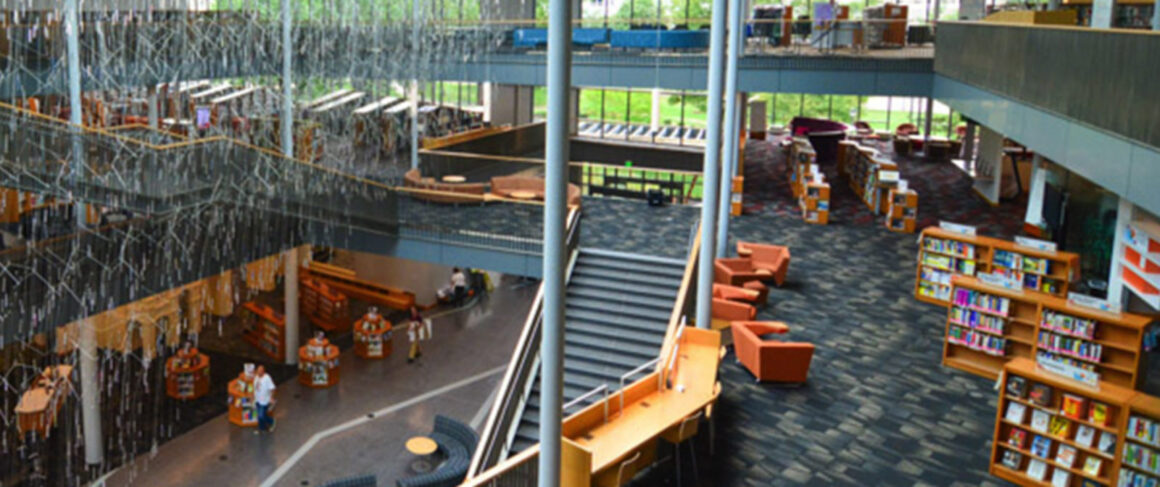
This report, from Dayton, Ohio, is about a library that has just been recognized by the ULC for its original and innovative new steps to deepen its connections with its community. Before and during a recent trip to Dayton, I had a chance to speak with some of the people who have designed and worked in the program. They told me about the difference it has made in Dayton, and the possible implications for communities elsewhere.
This year, ULC announced 6 Top Innovators, from a field of over 180 applicants in a broad sweep of categories. Full disclosure: I was on a panel of judges for the ULC’s innovation awards several years ago.
Some of this year’s winners reflect libraries’ responses to pressing issues from around the country. For example, the comeback of towns and residents suffering from the California fires, or updating library standards and operations to meet the rapidly-evolving needs of customers and effectiveness of staff.
One winner from the ULC for 2025 particularly caught our eye. It comes from Dayton, Ohio, an Our Towns favorite community for its collaborative spirit, strong institutions of higher ed, and hearty appetite for downtown development.
I spoke with Karlos L. Marshall, the Director of Community Impact and Innovation at the Dayton Metro Library (DML) and the force behind their winning project, called Reading Railroad.
Marshall described to me how he got started on Reading Railroad. It began with a problem he recognized as nationwide: the invisibility of Black men in the library. As a data point that surprised me to learn: Only one percent, 1%, of graduate level degrees in library sciences are earned by Black men. That’s the Master of Library and Information Science (MLIS) degree.
Marshall described a personal experience he had that informed his ideas. He told me that about five years ago, “I went to my first library conference within my first year. That was the Ohio Library Council’s annual conference (of about 400 people), and during the three days that I was there, I did not see one additional Black man. Wow.”
Marshall believes the absence of Black men is only part of the problem. For many Black boys who have found their way into libraries, he said, the experience and traditional themes “have centered on trauma rather than joy.” So to make libraries the library experience positive for Black boys has been an uphill climb.
What can a library do with this information and these observations? While no one can argue with addressing trauma, shouldn’t it be possible to address further questions on behalf of Black boys? Where are the positive stories; where are the relevant books; where are the role models? And you can make opportunities to pull Black men into the libraries, to be present to reinforce library culture with welcome and relevance.
Out of these problems—and possible solutions—as Marshall saw them, Reading Railroad was created. It is a novel, original set of projects to fill the gap of Black presence and relevance in the library. Marshall envisions that the benefits could be tangible, like improving the chronically low reading achievement scores among Black boys. And on a higher level, they could change lives. How? By opening the eyes of young Black boys to dream, for making pathways to credentials and jobs for Black men, by celebrating successful Black men and directing their energy into the library community.

Here are the projects:
One showpiece is the podcast series, Cataloging the Culture. Marshall interviews Black men, those involved with the library world in some way, from around the region, state, and country. For about 30 minutes, they talk about the guests’ origin stories, their successes, their vulnerabilities and personal and candid conversations. It’s not quite Oprah, but more than you see in formal, staged interviews.
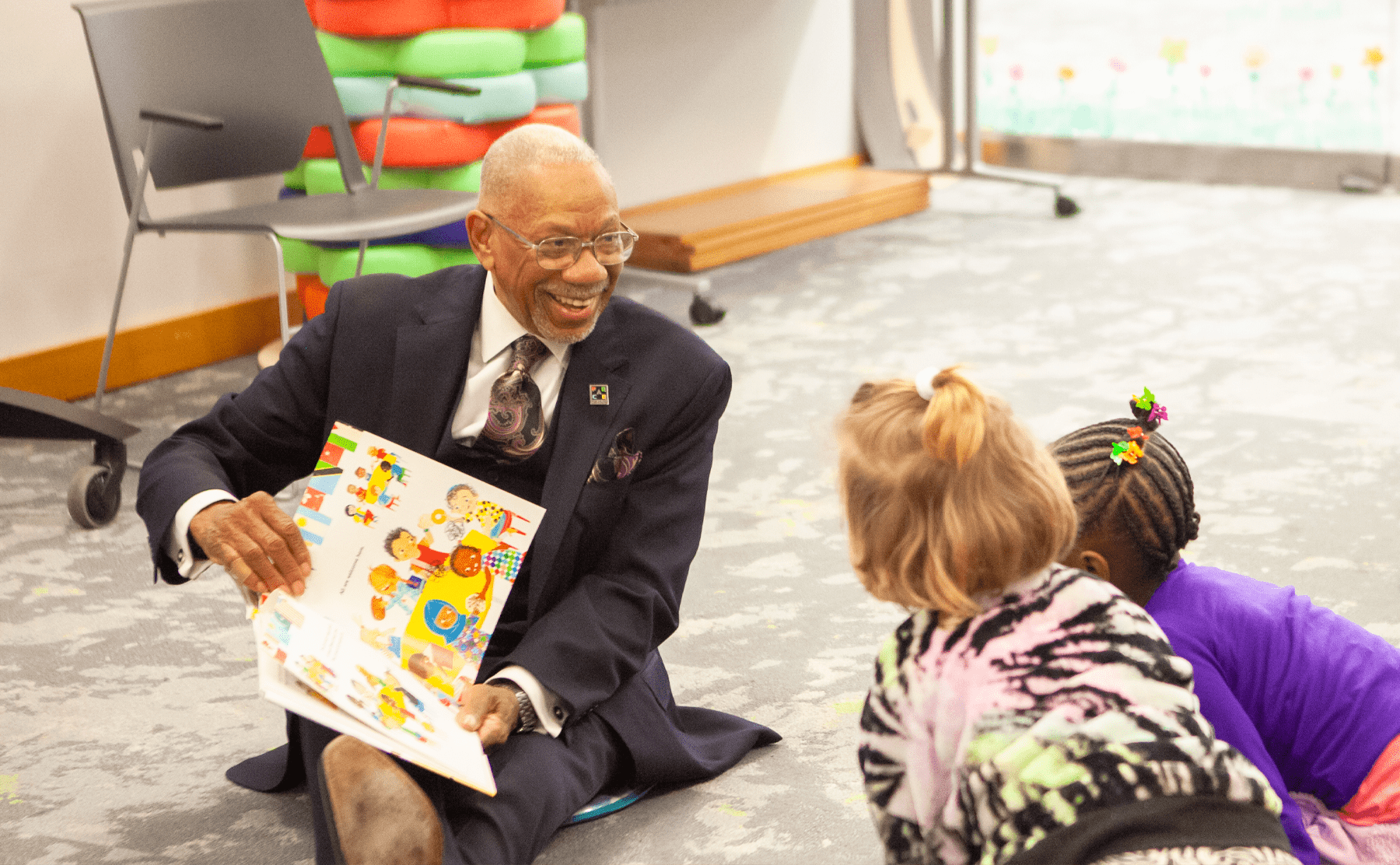
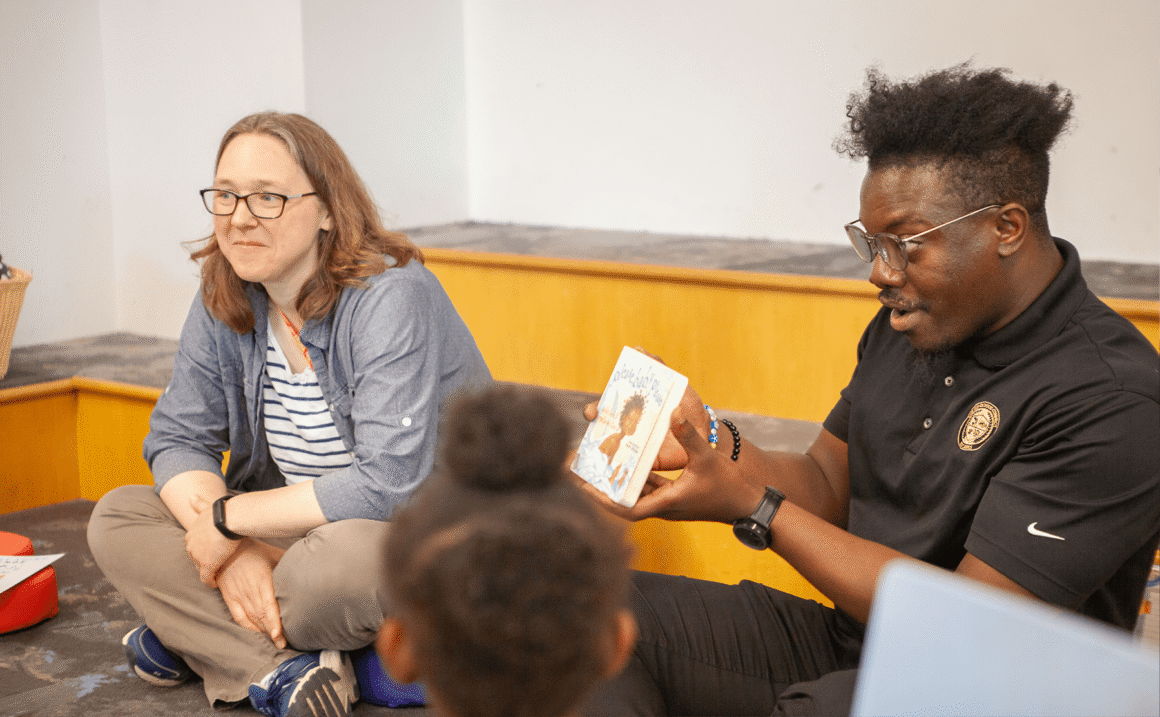
Then there is storytime, taken to a new level. Dozens of Black men from Dayton read regularly to hundreds of kids in the libraries around Dayton. Some readers are next-door neighbors, some are high profile, The so-called Hometown Heroes, like the newly-former Mayor Jeffrey Mims, make this a flagship program of Reading Railroad.
They read books curated to promote positive stories in Black culture. Marshall explains that, “A lot of times when we talk about culturally relevant literature, particularly for the Black literary canon, it seems to deviate to things about civil rights and things like that. Those stories are very important, particularly in this day and age. But again, I think about how excited kids are to hear about Black Panther.” Where that leads in terms of books, he says, is to stories about “everyday, daily activities and things of joy, whether that’s learning how to ride a bike or … how to tie a shoe or your first haircut”.
Marshall describes something that surprised him about the response to storytime readings. “A lot of times, for a lot of white children and adults and families, that’s also their first time seeing a Black man reading a children’s book… we’ve had patrons comment on that.” He sees Black men reading stories as more than that simple act, it’s something that is “changing people’s orientation and perception.”
Elise Calanni, who manages the innovation awards program at ULC, described the twist on traditional storytime projects this way: “I think that was why specific innovation was so impressive to us, is because it took something pretty simple, speaking frankly, and made it very impactful.”
A subset of the Reading Railroad’s readers are Black men in Dayton workforce and personal development programs. Their reading gives them experience in early childhood work and it can pay them up to a $5000 stipend at $22 per hour. “We do believe that could be a best practice for other libraries across the nation as well” said Marshall.
Some library programs and events partner with city, state, and national groups; the churches, community groups, fraternities, educational institutions, and others. For example:
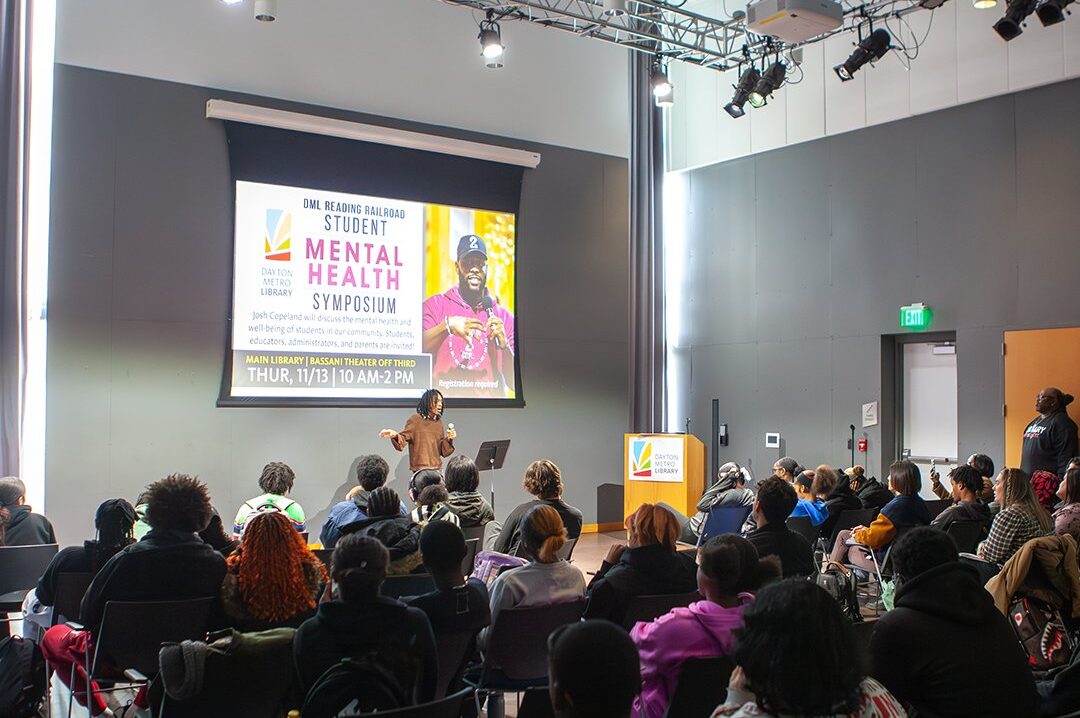
The Student Mental Health Symposium. The inaugural symposium brought 100 Dayton high schoolers to listen and talk about student mental health and well-being. Marshall says they’re using this experimental year to prepare better for the next round and how to make the most of a day’s symposium.
The DML partnered in the fall of 2025 with the Black Child Book Fair, a national traveling book fair that showcases Black authors and books. In Dayton, the fair put free signed books by Black authors into the hands of children.
The library’s Fatherhood Academy supports literacy, parenting skills, networking, and the adults’ own personal growth by partnering with the broader countywide Fatherhood Program.
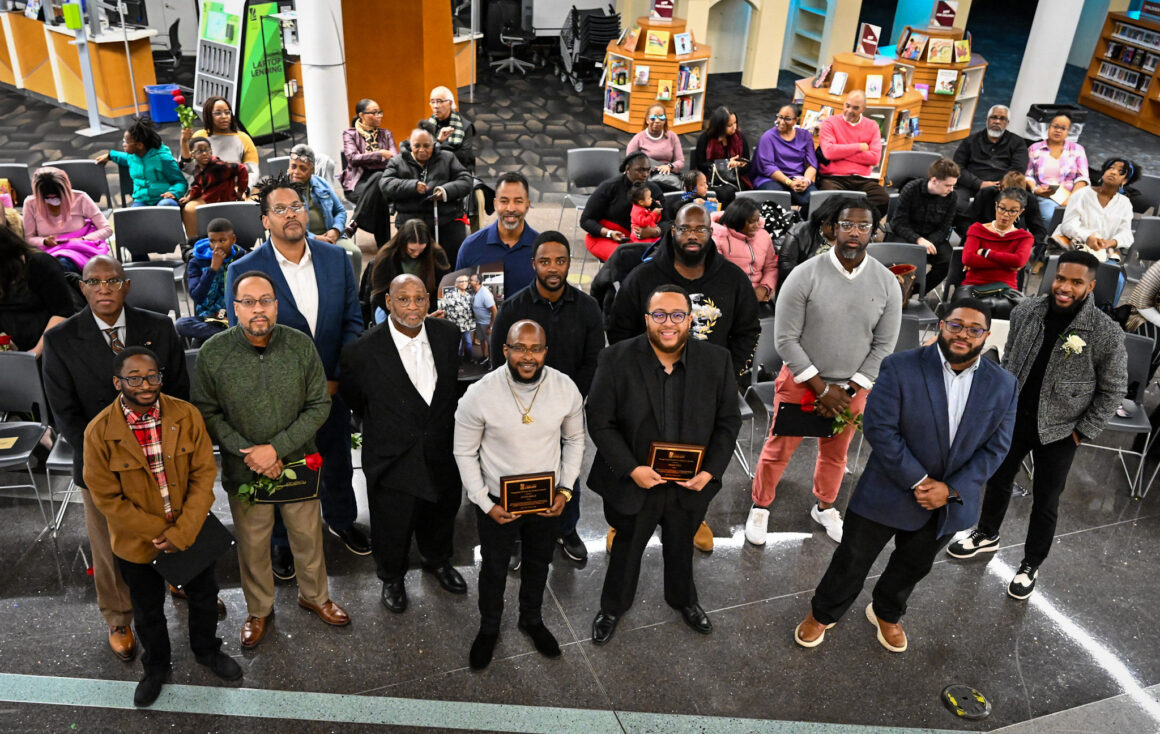
The novel Flowers for Fathers recognizes men participating in various community programs, presenting every winner with a rose. “Black fathers and father figures that are showing up in ways that are both seen and unseen,” says Marshall. He describes it poignantly as an inspiration behind the program this way: “I think a lot of men in general, irrespective of their race, but Black men in particular, for the majority of us, the first time that we ever receive flowers is during our funeral.”
How is the Reading Railroad program doing so far? By quantitative measurable output, it is doing well, engaging dozens of Black men and hundreds of children. Moving into its second year, it is undoubtedly a huge boost to be nationally recognized. ULC considers one of its strengths is as a model that can be replicable and scalable to other libraries. It offers a big networking opportunity for libraries across the country to connect with DML, to learn from them and adapt programs like theirs to their own communities.
At the highest level, Marshall knows it is a young program, and part of the struggle will be to figure out how to measure its qualitative outcomes. He says, “This is about changing people’s perception and relationship to reading and learning.”