
America’s first public library is almost as old as America itself. A look at how libraries are inventing vital new civic roles.
Open To All
When American life can seem ‘siloed’ and disconnected, libraries set an example of truly public inclusiveness.
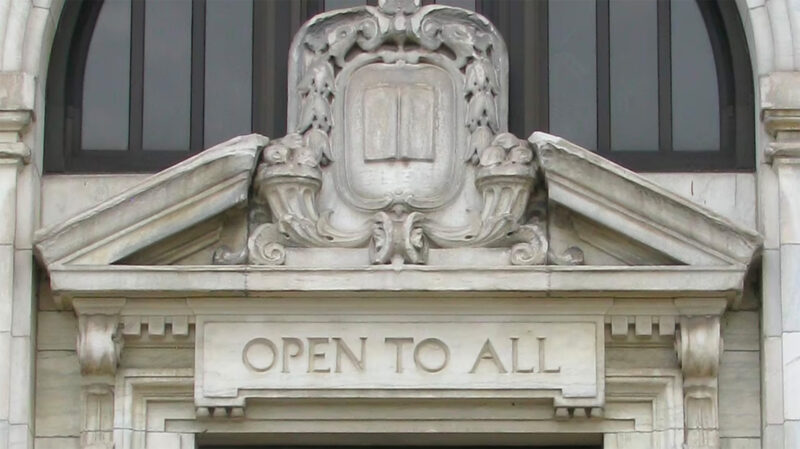
In their founding days, libraries occupied a more rarified culture than they do today. In the 18th century, Ben Franklin’s selective subscription libraries were for those who could pay their way. Toward the end of that century, libraries loosened up and eventually arrived at today’s model of being free and open. Andrew Carnegie was a driving force in bringing and building public libraries to scale across America in the early 20th century. Today’s Columbus OH’s formidable main library announces boldly, carved into granite over its main doors: OPEN TO ALL.
Libraries have continued to act on that belief and declaration, responding to the many challenges of the past centuries: economic booms and busts, swinging demographics, wars and peace, natural and manmade disasters, inequities and adjustments. All the while they have remained open, operating with balance and fortitude and the trust of their patrons.
Recently, libraries have been pushing back against book bans and challenges, standing up for everyone’s access to ALL books. They invest in hardware, software, and training in today’s technology, especially to strive for digital equity for the underserved.
They bring the library to the people who can’t bring themselves to the library. Sometimes that is through the national collections and services for the blind, including free mailed large-print and books in braille and audiobooks. Sometimes it is by outreach to kids who can’t make it to a faraway public library, through bookmobiles, and book deliveries to schools and rural areas.
Libraries remove obstacles to entry and use, by eliminating fines for those who need libraries most. A program like in Dayton’sReading Railroad draws in the underrepresented cohort of Black men into the library community, creating a waterfall effect of libraries as a welcome and comfortable place for all people.
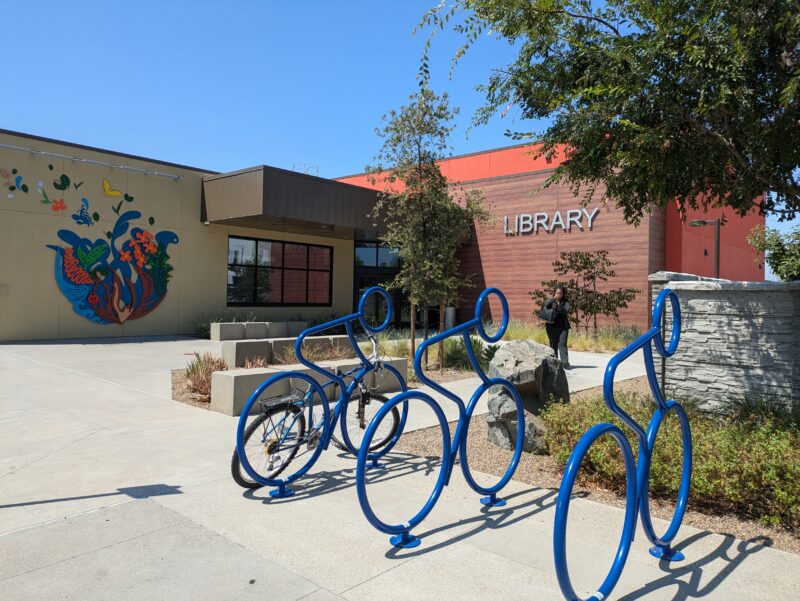
Architectural updates from classic but formal and often off-putting Carnegie style buildings to the open sidewalk window fronts catch the eyes of passersby and signal safety and welcome.
Second Responders
More than three centuries old and counting, American libraries prepare students, families, and communities for opportunities and challenges of our times.
We all know and recognize a community’s first responders; the policemen, firemen, and EMTs. In times of crisis, public libraries have stepped into the role of second responders.
In Ferguson MO, the public library stayed open when the schools were closed after the riots of 2014, to offer the kids a safe place and even classes taught by volunteers. After Hurricane Harvey in Houston TX on 2017, while branches were closed from damage, the main library remained up and running, for emergency services, help with FEMA claims, and children’s programs. After Hurricane Sandy in 2012, some libraries in New Jersey became places of refuge.
In the Queens Library’s Far Rockaway NY branch, after that hurricane the librarians continued story hours in the outdoor parking lot “to give them a sense of normalcy,” says Christian Zabriskie, who was a Queens librarian then. “Story time at the end of the world” he called it.
In Orlando, after the nightclub shootings of 2016, the library hosted an art gallery for those who made art as a way to express and share their reactions. After the devastating Thomas Fire and flooding of 2017, the Santa Barbara CA Public Library invited the public to share their stories and lessons, to help heal and prepare for the future. There are countless examples of libraries stepping in as fast as they can and ahead of others.
And then there’s covid. The libraries’ standup response was vast. Determined to keep book lending going, some libraries tried an early, but quickly abandoned idea, That was to microwave or bake books to kill the “germs”. In a more conventional effort, libraries kept their internet on, reaching parking lots for schoolkids and workers. Some ran extension cords out their windows to ensure power. They supplied grab-and-go lunches for kids. Many libraries used the 3-D printers from their makerspaces to produce PPEs, masks, and shields.
In the long months of Covid-related shutdowns, many libraries ramped up their online presence to those housebound. They produced lists of resources for children’s activities; plans for improving adult job skills and dealing with job loss; hobby ideas; reading lists; ways to sleep better, meditate, and stay calm; ways to exercise; and ideas for virtual, social interaction.
Libraries became true lifelines for needy people and emergency operations during the pandemic and its aftermath. In Burlington VT, Erie PA, and elsewhere, librarians spent hours on the phone with elderly patrons, who had always counted on the library for social connections and with city or county offices that needed extra resources to research the flood of questions from citizens. In Anchorage, the library, with its internet and extra space, became an emergency operations center for the city.
Always a refuge and safe place for the homeless, during the Covid lockdowns, the Spokane WA library became an actual temporary homeless shelter. Always a trusted place, libraries became the go-to public-service source, posting timely, accurate, curated information on city services, public advisories, health directives, tax and unemployment issues, and of course, COVID-19 information.
For efforts whether in times of urgency or not, libraries have been recognized and rewarded. Here are two examples. At a make or break moment for their library system, in the middle of economic challenges for their city and entire state, in 2014 Charleston WV voted to tax themselves to help their libraries. The lights stayed on and the library even grew and expanded in spectacular fashion in later years. After the Palisades Fires of 2025 destroyed the Palisades branch of the Los Angeles CA public library, the library foundation stepped up to fill in recovery funds where FEMA left off.
Community Hubs
More than three centuries old and counting, American libraries prepare students, families, and communities for opportunities and challenges of our times.
Public libraries have grown well beyond their original mission of lending books to suit the needs of communities. This is the way of libraries around the country. Here are some examples:
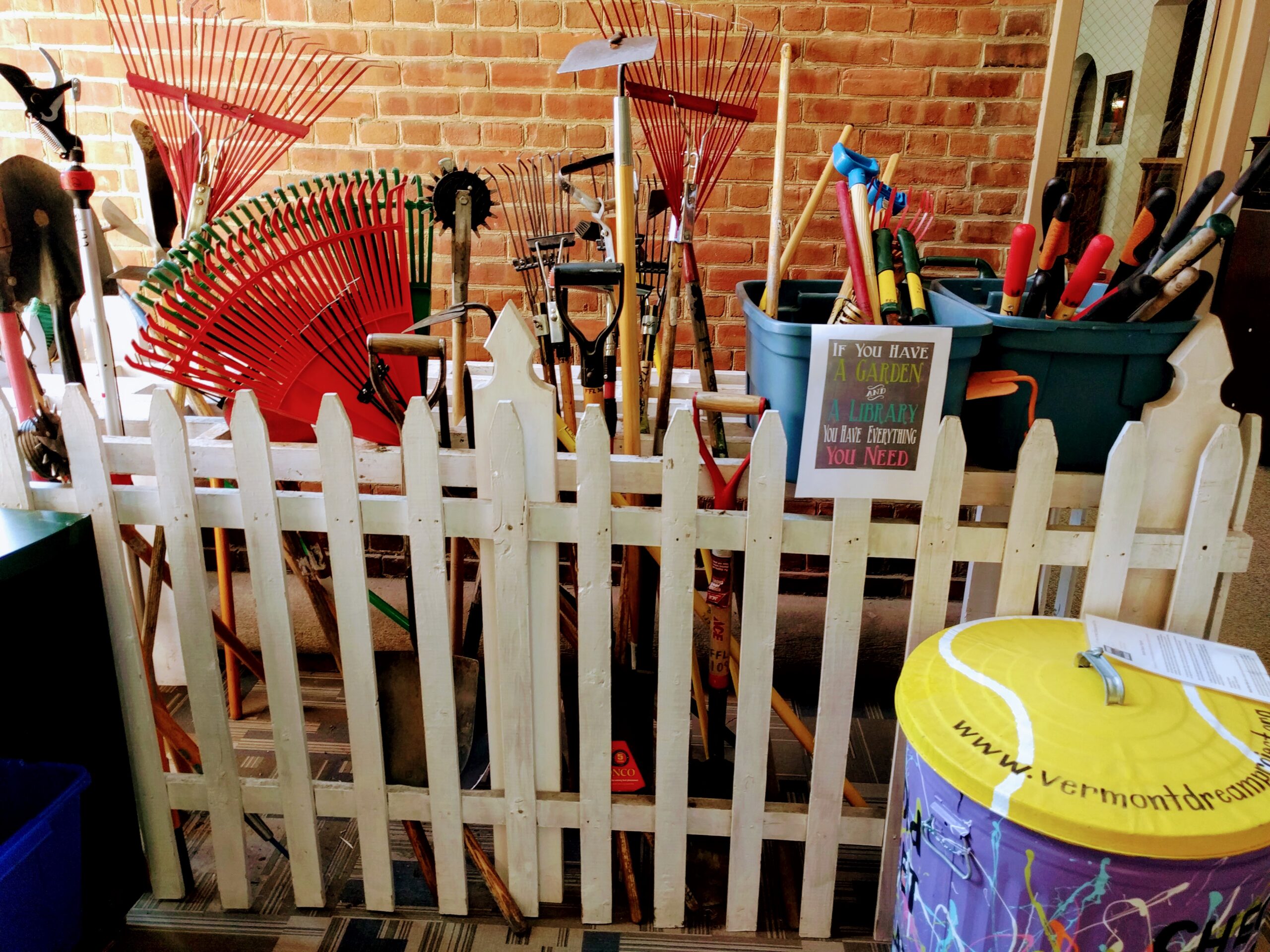
— Many libraries host makerspaces and “libraries of things” to lend, like snowshovels in winter, games, kitchen and industrial equipment. Some host extensive art collections , like in Winston-Salem NC and arts competitions, like in Greenville SC.
Libraries’ archives preserve the histories of towns; of the civil rights era in the Birmingham AL library with the holdings about Martin Luther King Jr., and the Lincoln Shrine in Redlands CA, a collection of Lincolniana that began with a family’s philanthropy. Civil War archives in Columbus MS provide research and lessons for high school students to bring the story of their town alive in public presentations as a bridge across today’s ongoing racial issues. Many libraries have local or regional history collections, and the ever-popular genealogy offerings.
There are casual draws to residents, like in-library coffee shops modeled in Brownsville TX . Or several libraries in Colorado, which offer free passes to parks or equipment and maps for hiking. Self-improvement programs abound, as in instructive seed-lending programs, citizenship classes and ESL classes in San Bernardino CA. Seemingly everywhere are classes in basic technology, job applications, interviewing skills, small business startups, movies to watch, author talks and fix-it demonstrations.
Libraries are opportunistic and creative about where they show up, beyond the classic Carnegie libraries or the modern, sidewalk-appeal libraries. Libraries appear in unusual places: summer floating libraries on the lakes in Minnesota and pop-up libraries on streets of Wichita KS, inside airports in Washington DC and Bend OR.
Libraries everywhere are great sources of help and advice: financial advice, health advice, mortgage and rental advice, and newly AI education and training for staff and customers alike. There are classes on fire hazards and high-end hobbies in Bend OR. And staff are trained in the use of Narcan. In Pima County AZ, visiting nurses make regular visits to advise those who can’t afford medical care. And in smalltown Pennsylvania, a library can also be a place of healing for those who need solace.
Some 12 years ago, when we began reporting for Our Towns, some libraries showed an active resistance or at least a strong discomfort at being labeled community hubs or community centers. Now, it is a label of pride.
Futures
More than three centuries old and counting, American libraries prepare students, families, and communities for opportunities and challenges of our times.
Libraries are always anticipating and planning, sharing their experiences with each other and creating models.
As book-banning efforts spread, libraries looked to the American Library Association for information, data, talking points and processes on how to meet the challenges.
As AI becomes prominent, ubiquitous and necessary, there are many opportunities for staff development, including guidelines, courses, and certifications. These are targeting both inside-library operations and serving their public.
The Sustainable Libraries Initiative offers entire wrapround mentoring, training, and certification for libraries at all levels where sustainability meets communities. We wrote about the progressive movement in San Diego County CA and its Lakeside Public Library.
Libraries have taken lessons from the pandemic work-arounds, and are using them to rebalance their programming. Often, for example, they learned that online and virtual offerings are much more accessible and valuable for their customers than in-person activities.
Other libraries are surveying and listening to their customers and assessing their habits, as libraries project future budgeting of their time and resources. Do library users want upgraded teen offerings? More yoga and tai chi? More streaming services or print newspapers and magazines. Do they prefer e-books or hard cover? Libraries continue drawing in their communities and acting in deference to their wants and needs.
America’s first public library is almost as old as America itself. A look at how libraries are inventing vital new civic roles.
Open to All
When American life can seem ‘siloed’ and disconnected, libraries set an example of truly public inclusiveness.
Second Responders
Who is there to rebuild and connect communities, after emergencies have passed? More and more we look to librarians.
Community Hubs
The new ‘third spaces’ taking shape within library walls.
Futures
More than three centuries old and counting, American libraries prepare students, families, and communities for opportunities and challenges of our times.
In their founding days, libraries occupied a more rarified culture than they do today. In the 18th century, Ben Franklin’s selective subscription libraries were for those who could pay their way. Toward the end of that century, libraries loosened up and eventually arrived at today’s model of being free and open. Andrew Carnegie was a driving force in bringing and building public libraries to scale across America in the early 20th century. Today’s Columbus OH’s formidable main library announces boldly, carved into granite over its main doors: OPEN TO ALL.
Libraries have continued to act on that belief and declaration, responding to the many challenges of the past centuries: economic booms and busts, swinging demographics, wars and peace, natural and manmade disasters, inequities and adjustments. All the while they have remained open, operating with balance and fortitude and the trust of their patrons.
Recently, libraries have been pushing back against book bans and challenges, standing up for everyone’s access to ALL books. They invest in hardware, software, and training in today’s technology, especially to strive for digital equity for the underserved.
They bring the library to the people who can’t bring themselves to the library. Sometimes that is through the national collections and services for the blind, including free mailed large-print and books in braille and audiobooks. Sometimes it is by outreach to kids who can’t make it to a faraway public library, through bookmobiles, and book deliveries to schools and rural areas.
Libraries remove obstacles to entry and use, by eliminating fines for those who need libraries most. A program like in Dayton’s Reading Railroad draws in the underrepresented cohort of Black men into the library community, creating a waterfall effect of libraries as a welcome and comfortable place for all people.
Architectural updates from classic but formal and often off-putting Carnegie style buildings to the open sidewalk window fronts catch the eyes of passersby and signal safety and welcome.
We all know and recognize a community’s first responders; the policemen, firemen, and EMTs. In times of crisis, public libraries have stepped into the role of second responders.
In Ferguson MO, the public library stayed open when the schools were closed after the riots of 2014, to offer the kids a safe place and even classes taught by volunteers. After Hurricane Harvey in Houston TX on 2017, while branches were closed from damage, the main library remained up and running, for emergency services, help with FEMA claims, and children’s programs. After Hurricane Sandy in 2012, some libraries in New Jersey became places of refuge.
In the Queens Library’s Far Rockaway NY branch, after that hurricane the librarians continued story hours in the outdoor parking lot “to give them a sense of normalcy,” says Christian Zabriskie, who was a Queens librarian then. “Story time at the end of the world” he called it.
In Orlando, after the nightclub shootings of 2016, the library hosted an art gallery for those who made art as a way to express and share their reactions. After the devastating Thomas Fire and flooding of 2017, the Santa Barbara CA Public Library invited the public to share their stories and lessons, to help heal and prepare for the future. There are countless examples of libraries stepping in as fast as they can and ahead of others.
And then there’s covid. The libraries’ standup response was vast. Determined to keep book lending going, some libraries tried an early, but quickly abandoned idea, That was to microwave or bake books to kill the “germs”. In a more conventional effort, libraries kept their internet on, reaching parking lots for schoolkids and workers. Some ran extension cords out their windows to ensure power. They supplied grab-and-go lunches for kids. Many libraries used the 3-D printers from their makerspaces to produce PPEs, masks, and shields.
In the long months of Covid-related shutdowns, many libraries ramped up their online presence to those housebound. They produced lists of resources for children’s activities; plans for improving adult job skills and dealing with job loss; hobby ideas; reading lists; ways to sleep better, meditate, and stay calm; ways to exercise; and ideas for virtual, social interaction.
Libraries became true lifelines for needy people and emergency operations during the pandemic and its aftermath. In Burlington VT, Erie PA, and elsewhere, librarians spent hours on the phone with elderly patrons, who had always counted on the library for social connections and with city or county offices that needed extra resources to research the flood of questions from citizens. In Anchorage, the library, with its internet and extra space, became an emergency operations center for the city.
Always a refuge and safe place for the homeless, during the Covid lockdowns, the Spokane WA library became an actual temporary homeless shelter. Always a trusted place, libraries became the go-to public-service source, posting timely, accurate, curated information on city services, public advisories, health directives, tax and unemployment issues, and of course, COVID-19 information.
For efforts whether in times of urgency or not, libraries have been recognized and rewarded. Here are two examples. At a make or break moment for their library system, in the middle of economic challenges for their city and entire state, in 2014 Charleston WV voted to tax themselves to help their libraries. The lights stayed on and the library even grew and expanded in spectacular fashion in later years. After the Palisades Fires of 2025 destroyed the Palisades branch of the Los Angeles CA public library, the library foundation stepped up to fill in recovery funds where FEMA left off.
(Deborah Fallows)
Public libraries have grown well beyond their original mission of lending books to suit the needs of communities. This is the way of libraries around the country. Here are some examples:
— Many libraries host makerspaces and “libraries of things” to lend, like snowshovels in winter, games, kitchen and industrial equipment. Some host extensive art collections , like in Winston-Salem NC and arts competitions, like in Greenville SC.
Libraries’ archives preserve the histories of towns; of the civil rights era in the Birmingham AL library with the holdings about Martin Luther King Jr., and the Lincoln Shrine in Redlands CA, a collection of Lincolniana that began with a family’s philanthropy. Civil War archives in Columbus MS provide research and lessons for high school students to bring the story of their town alive in public presentations as a bridge across today’s ongoing racial issues. Many libraries have local or regional history collections, and the ever-popular genealogy offerings.
There are casual draws to residents, like in-library coffee shops modeled in Brownsville TX . Or several libraries in Colorado, which offer free passes to parks or equipment and maps for hiking. Self-improvement programs abound, as in instructive seed-lending programs, citizenship classes and ESL classes in San Bernardino CA. Seemingly everywhere are classes in basic technology, job applications, interviewing skills, small business startups, movies to watch, author talks and fix-it demonstrations.
Libraries are opportunistic and creative about where they show up, beyond the classic Carnegie libraries or the modern, sidewalk-appeal libraries. Libraries appear in unusual places: summer floating libraries on the lakes in Minnesota and pop-up libraries on streets of Wichita KS, inside airports in Washington DC and Bend OR.
Libraries everywhere are great sources of help and advice: financial advice, health advice, mortgage and rental advice, and newly AI education and training for staff and customers alike. There are classes on fire hazards and high-end hobbies in Bend OR. And staff are trained in the use of Narcan. In Pima County AZ, visiting nurses make regular visits to advise those who can’t afford medical care. And in smalltown Pennsylvania, a library can also be a place of healing for those who need solace.
Some 12 years ago, when we began reporting for Our Towns, some libraries showed an active resistance or at least a strong discomfort at being labeled community hubs or community centers. Now, it is a label of pride.
Libraries are always anticipating and planning, sharing their experiences with each other and creating models.
As book-banning efforts spread, libraries looked to the American Library Association for information, data, talking points and processes on how to meet the challenges.
As AI becomes prominent, ubiquitous and necessary, there are many opportunities for staff development, including guidelines, courses, and certifications. These are targeting both inside-library operations and serving their public.
The Sustainable Libraries Initiative offers entire wrapround mentoring, training, and certification for libraries at all levels where sustainability meets communities. We wrote about the progressive movement in San Diego County CA and its Lakeside Public Library.
Libraries have taken lessons from the pandemic work-arounds, and are using them to rebalance their programming. Often, for example, they learned that online and virtual offerings are much more accessible and valuable for their customers than in-person activities.
Other libraries are surveying and listening to their customers and assessing their habits, as libraries project future budgeting of their time and resources. Do library users want upgraded teen offerings? More yoga and tai chi? More streaming services or print newspapers and magazines. Do they prefer e-books or hard cover? Libraries continue drawing in their communities and acting in deference to their wants and needs.
The survival and revival of local news operations are keys to everything that matters in civic life. This special report will feature updates, resources, links, success stories, setbacks, and other guides to the state of the local media—and to the national search for creative new editorial and economic models.
The Challenge
An Old Economic Model Vanishes. ‘News Deserts’ Appear.
An Emerging Coalition
Groups and individuals who are meeting the moment.
Innovative Models
New sites with creative editorial and business approaches.
A Notable Success Story
Publishers offer “a credible, enduring source of local journalism”.

The indispensable Rebuild Local News coalition features a new report on the problem. A recent post by its founder, the writer and entrepreneur Steven Waldman, found that the local-news crisis was “more severe and widespread” than previously known. You can read his full report here. Above is the innovative map his coalition and Muck Rack have produced to quantify and illustrate the problem, county by county.
The collection of our previous local journalism reporting for Our Towns is here.

The list below is important in two ways. The first is that each and every one of these links takes you to its own detailed list of experiments, success stories, lessons learned (including setbacks), and practical examples to apply.
The second is that its breadth should convey courage-in-numbers. People trying to solve this problem in their own communities are not alone. Here we go:
Again, Rebuild Local News is worth following closely, for its hands-on efforts to develop legislation state-by-state to improve prospects for the news. As context, its leader, Steven Waldman, was a co-founder for the invaluable Report for America, which we have reported on before and which recently announced a milestone of its corps members producing 100,000 stories for their mainly local publications.
In addition, a heartening number of NGOs, alliances, foundations, civic groups, and other organizations are pitching in to revive local news. To name just a few that are worth following, with links to each: Press Forward. The Knight Foundation. The MacArthur Foundation. The American Journalism Project. The Institute for Non Profit News. LION, or the Local Independent Online News Publishers. The Lenfest Institute. The Solutions Journalism Network. The National Trust for Local News. The Medill School at Northwestern, with its Local News Initiative. The Institute for Rural Journalism, based at the University of Kentucky, is another indispensable daily news source on this front, with its Rural Blog. From The Guardian, a report on scientists reviving a climate site that Team Trump had closed down. Although it covers much more than journalism, we follow David Byrne’s Reasons to be Cheerful. Similarly with The Progress Network, and The Daily Yonder, and many more.
We’ll continue to add to and update this list. And we welcome suggestions and additions.

The Texas Tribune is perhaps best known. The Baltimore Banner is three years old and has made an enormous mark. (It has won Pultizer and Polk awards.) The Mississippi Free Press, based in Jackson, is five years old and is similarly influential and celebrated. Mississippi Today is nine years old and has won a Pulitzer for its work. The Land, in Cleveland, trains citizen journalists. The Mainstreet Daily News, in Gainesville, Florida, has won significant subscriber support. In Vermont, both VT Digger and Seven Days are well-known statewide news sources. The Kingsbury Journal in DeSmet SD was reborn out of the demise of two smaller local publications. Universities across the country are doing more and more to report on their communities. Just one prominent example is from Muncie, Indiana, where the Ball State Daily News is a leading source of local coverage.
The only problem with starting a list like this is that there could be 100 more entries, with new ones being launched almost every week. Again it’s a race: how fast the old order is collapsing, versus how fast the order is being built. We’ll do our best to keep up with new entries to the list—and new models of funding sources, reader engagement, uses of technology and AI, and other innovations in pursuit of sustainable truth-telling—in this space.

In August, a familiar local-news-collapse story emerged. A company called News Media Corporation, which had billed itself as “the voice of small town America,” suddenly announced that it would immediately shut down more than 30, across five inland states. (Wyoming, South Dakota, Nebraska, Illinois, and Arizona.)
Within two weeks, many of these papers were rescued. A small-newspaper company called Champion Media, based in North Carolina and run by members of the Champion family, bought the four orphaned papers in South Dakota. Three newspaper executives in Wyoming bought the eight shuttered papers there and re-hired the staff. “We are honored to assume stewardship of these legacy community newspapers,” Robb Hicks, one of the purchasers, said in an announcement (as quoted in WyoFile). “Our foremost priority has been to ensure that these counties are not left without a credible, enduring source of local journalism.” Amen.
It’s a race, and a battle. Admiration to all who stand up.
The survival and revival of local news operations are keys to everything that matters in civic life. This special report will feature updates, resources, links, success stories, setbacks, and other guides to the state of the local media—and to the national search for creative new editorial and economic models.
The Challenge
An Old Economic Model Vanishes. ‘News Deserts’ Appear.
The indispensable Rebuild Local News coalition features a new report on the problem. A recent post by its founder, the writer and entrepreneur Steven Waldman, found that the local-news crisis was “more severe and widespread” than previously known. You can read his full report here. Above is the innovative map his coalition and Muck Rack have produced to quantify and illustrate the problem, county by county.
The collection of our previous local journalism reporting for Our Towns is here.
An Emerging Coalition
New sites with creative editorial and business approaches.
The list below is important in two ways. The first is that each and every one of these links takes you to its own detailed list of experiments, success stories, lessons learned (including setbacks), and practical examples to apply.
The second is that its breadth should convey courage-in-numbers. People trying to solve this problem in their own communities are not alone. Here we go:
Again, Rebuild Local News is worth following closely, for its hands-on efforts to develop legislation state-by-state to improve prospects for the news. As context, its leader, Steven Waldman, was a co-founder for the invaluable Report for America , which we have reported on before and which recently announced a milestone of its corps members producing 100,000 stories for their mainly local publications.
In addition, a heartening number of NGOs, alliances, foundations, civic groups, and other organizations are pitching in to revive local news. To name just a few that are worth following, with links to each: Press Forward. The Knight Foundation. The MacArthur Foundation. The American Journalism Project. The Institute for Non Profit News. LION, or the Local Independent Online News Publishers. The Lenfest Institute. The Solutions Journalism Network. The National Trust for Local News. The Medill School at Northwestern, with its Local News Initiative. The Institute for Rural Journalism, based at the University of Kentucky, is another indispensable daily news source on this front, with its Rural Blog. From The Guardian, a report on scientists reviving a climate site that Team Trump had closed down. Although it covers much more than journalism, we follow David Byrne’s Reasons to be Cheerful. Similarly with The Progress Network, and The Daily Yonder, and many more.
We’ll continue to add to and update this list. And we welcome suggestions and additions.
Innovative Models
Local, state-wide, and national sites with new, successful editorial and business approaches.
The Texas Tribune is perhaps best known. The Baltimore Banner is three years old and has made an enormous mark. (It has won Pultizer and Polk awards.) The Mississippi Free Press, based in Jackson, is five years old and is similarly influential and celebrated. Mississippi Today is nine years old and has won a Pulitzer for its work. The Land, in Cleveland, trains citizen journalists. The Mainstreet Daily News, in Gainesville, Florida, has won significant subscriber support. In Vermont, both VT Digger and Seven Days are well-known statewide news sources. The Kingsbury Journal in DeSmet SD was reborn out of the demise of two smaller local publications. Universities across the country are doing more and more to report on their communities. Just one prominent example is from Muncie, Indiana, where the Ball State Daily News is a leading source of local coverage.
The only problem with starting a list like this is that there could be 100 more entries, with new ones being launched almost every week. Again it’s a race: how fast the old order is collapsing, versus how fast the order is being built. We’ll do our best to keep up with new entries to the list—and new models of funding sources, reader engagement, uses of technology and AI, and other innovations in pursuit of sustainable truth-telling—in this space.
A Notable Success Story
Publishers offer “a credible, enduring source of local journalism”.
In August, a familiar local-news-collapse story emerged. A company called News Media Corporation, which had billed itself as “the voice of small town America,” suddenly announced that it would immediately shut down more than 30, across five inland states. (Wyoming, South Dakota, Nebraska, Illinois, and Arizona.)
Within two weeks, many of these papers were rescued. A small-newspaper company called Champion Media, based in North Carolina and run by members of the Champion family, bought the four orphaned papers in South Dakota. Three newspaper executives in Wyoming bought the eight shuttered papers there and re-hired the staff. “We are honored to assume stewardship of these legacy community newspapers,” Robb Hicks, one of the purchasers, said in an announcement (as quoted in WyoFile). “Our foremost priority has been to ensure that these counties are not left without a credible, enduring source of local journalism.” Amen.
It’s a race, and a battle. Admiration to all who stand up.